Beyond the Ordinary: Why "Strange Auroras Discovered" Demands a Richer Vocabulary
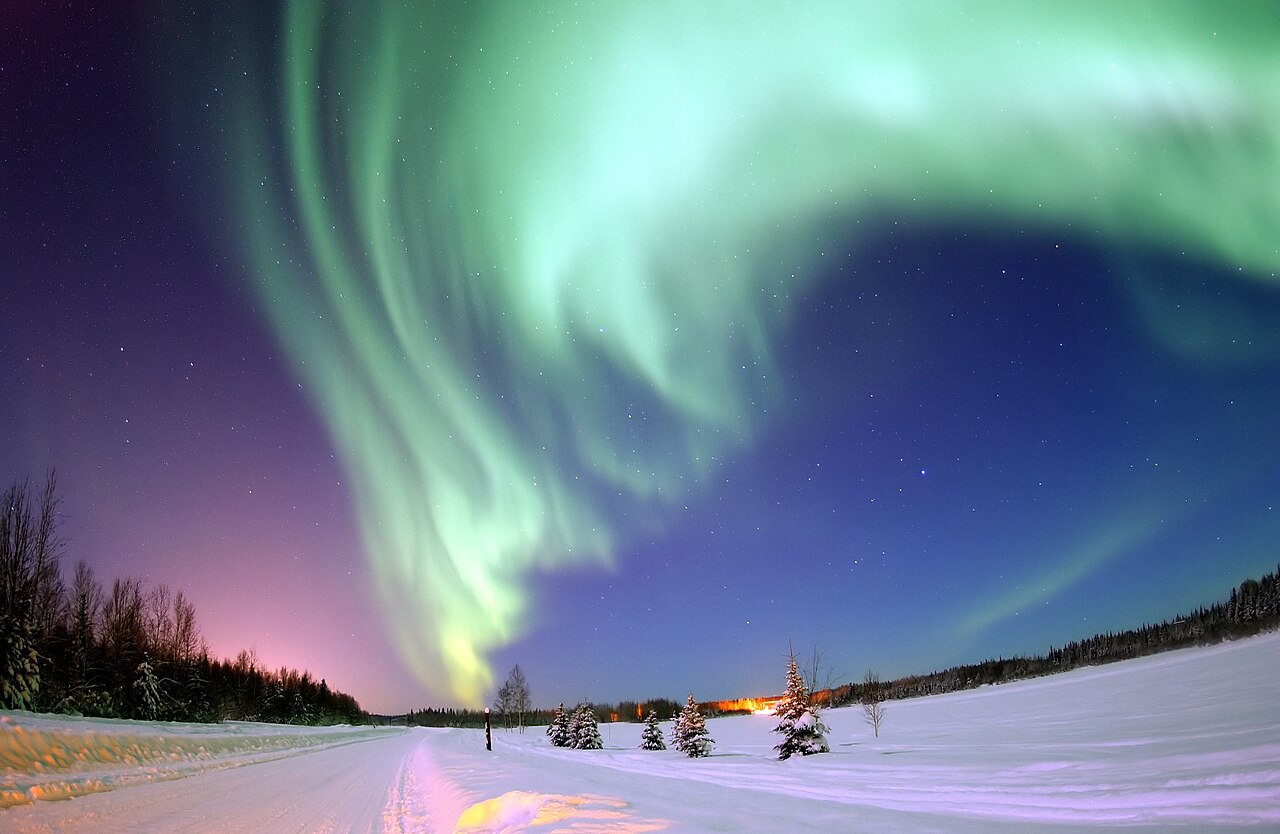
The universe is a canvas of wonder, constantly unveiling phenomena that challenge our understanding. From distant galaxies to the dance of particles in our own atmosphere, discoveries often begin with a simple yet powerful descriptor: "strange." Imagine the buzz when news broke about "strange auroras discovered" — an announcement that immediately sparks curiosity and a sense of the unknown. While "strange" serves as an excellent initial gateway to intrigue, its broadness often leaves us wanting more. To truly capture the essence, the nuance, and the full impact of such a groundbreaking find, we must venture beyond this common adjective and embrace a wider lexicon.
This article delves into the rich tapestry of words that can stand in for, or complement, "strange." We'll explore why simply saying "strange" might not always suffice, and how selecting the perfect synonym can elevate your communication, whether you're describing a celestial spectacle, an enigmatic artwork, or a peculiar scientific observation.
The Curious Case of "Strange Auroras Discovered": A Catalyst for Precision
Let's dwell for a moment on the hypothetical scenario of "strange auroras discovered." What exactly makes them "strange"? Is it their color, their shape, their location, their behavior, or something else entirely? The word "strange" acts as a placeholder for a multitude of specific qualities. For instance, if these auroras appeared in an unexpected geographical location, "anomalous" or "unprecedented" might be more fitting. If their light patterns defied known physics, "inexplicable" or "baffling" would better convey the scientific challenge.
The initial announcement of "strange auroras discovered" is effective in grabbing headlines and immediate attention. It hints at something outside the norm, something that defies easy categorization. However, as scientists and journalists elaborate on these findings, they need to transition from a general descriptor to a more precise language that communicates specific aspects of their oddity. This is where the power of synonyms becomes invaluable. It allows for a layered description, moving from the initial shock of "strange" to a more detailed understanding of *how* they are strange.
Unpacking the Nuances: When "Strange" Just Isn't Enough
"Strange" fundamentally means unfamiliar, unusual, or unexpected. It's a versatile word, but its very versatility can be its weakness. It can be vague, failing to convey the specific flavor of 'oddness' that we intend. When describing something as profound as newly observed "strange auroras discovered," mere strangeness might not capture the awe, the mystery, or even the potential scientific implications. Let's break down categories of synonyms to see how they offer distinct shades of meaning.
Synonyms for Unfamiliarity or Newness
When something is "strange" because it's simply *new* or *unknown* to us:
* **Unfamiliar:** Lacking previous acquaintance or experience.
* *Example:* The **unfamiliar** spectral signature of the newly discovered auroras puzzled astronomers.
* **Novel:** New and original, not resembling something formerly known or used.
* *Example:* The **novel** light phenomenon painted the polar sky, unlike any aurora seen before.
* **Uncharted:** Not previously explored or mapped.
* *Example:* Scientists ventured into **uncharted** territory with their theories about the bizarre celestial display.
* **Alien:** Belonging to a foreign country or land; also, of a different nature or character.
* *Example:* The shimmering patterns had an almost **alien** quality, defying earthly explanations.
Synonyms for Abnormality or Deviation
When something is "strange" because it deviates from the expected norm or standard:
* **Unusual:** Not habitually or commonly occurring or done; out of the ordinary.
* *Example:* The intensity and duration of these **unusual** auroras were unprecedented.
* **Peculiar:** Different from the usual or normal; eccentric.
* *Example:* Observers noted the **peculiar** spiral formations within the "strange auroras discovered."
* **Abnormal:** Deviating from what is normal or typical.
* *Example:* The particles exhibited **abnormal** energy levels, suggesting a new kind of solar interaction.
* **Aberrant:** Departing from an accepted standard; divergent.
* *Example:* The **aberrant** behavior of the magnetic field lines was linked to the aurora's unusual appearance.
Synonyms for Mysterious or Puzzling Aspects
When something is "strange" because it is hard to understand or explain:
* **Enigmatic:** Difficult to interpret or understand; mysterious.
* *Example:* The **enigmatic** pulses emanating from the aurora added to its profound mystery.
* **Cryptic:** Having a meaning that is mysterious or obscure.
* *Example:* Researchers analyzed the **cryptic** light shifts, searching for patterns.
* **Perplexing:** Completely baffling; very puzzling.
* *Example:* The speed of the aurora's movement proved **perplexing** to all models.
* **Baffling:** Totally bewildering or perplexing.
* *Example:* It was a **baffling** discovery, challenging fundamental theories of space weather.
* **Inexplicable:** Unable to be explained or accounted for.
* *Example:* The sudden appearance of the "strange auroras discovered" remained **inexplicable** for months.
Synonyms for the Eerie, Unsettling, or Bizarre
When something is "strange" because it evokes a sense of unease, wonder, or extreme oddness:
* **Eerie:** Strange and frightening.
* *Example:* The silent, **eerie** glow hung over the desolate landscape, inspiring both awe and apprehension.
* **Uncanny:** Strange or mysterious, especially in an unsettling way.
* *Example:* There was an **uncanny** similarity between the aurora's movement and certain biological patterns.
* **Bizarre:** Very strange or unusual, especially so as to cause interest or amusement.
* *Example:* The **bizarre** array of colors defied the typical green and red palette of known auroras.
* **Outlandish:** Looking or sounding bizarre or unfamiliar.
* *Example:* Initial reports of the **outlandish** celestial display were met with skepticism.
Practical Tips for Choosing the Perfect Word
Selecting the right synonym is an art, not a science. It requires careful consideration of context, intent, and impact. Here are some actionable tips:
1. **Consider the Specific Aspect of "Strangeness":** Is it unfamiliarity, abnormality, mystery, or an unsettling quality? This is your primary guide.
2. **Analyze Your Audience:** Are you writing a scientific report, a popular science article, or a fictional narrative? A scientific audience might prefer "anomalous" or "aberrant," while a general audience might connect better with "mysterious" or "eerie."
3. **Gauge the Desired Impact:** Do you want to inform, intrigue, alarm, or inspire awe? Words like "baffling" evoke intellectual challenge, "eerie" creates atmosphere, and "novel" suggests innovation.
4. **Avoid Repetition:** Even if "strange" is perfectly acceptable, using it repeatedly can make your prose monotonous. Varying your vocabulary keeps the reader engaged.
5. **Use a Thesaurus Wisely:** Don't just pick the first word that appears. Look up its definition, check its connotations, and see it used in example sentences to ensure it fits your context. Many words have subtle differences in meaning.
6. **Read Extensively:** The best way to build your vocabulary and understand nuance is to read high-quality writing across various genres. Pay attention to how skilled writers deploy specific adjectives.
The Power of Precise Language in Scientific Discovery and Beyond
In fields like astrophysics, geology, or biology, the precise description of a phenomenon can be as crucial as the discovery itself. When scientists announce "strange auroras discovered," the follow-up language is vital for conveying the *nature* of their strangeness, guiding further research, and communicating findings accurately to the global community. Vague language can lead to misinterpretation, whereas precise terminology fosters clear understanding and builds a robust foundation for knowledge.
Beyond science, the ability to articulate specific nuances of "strange" enhances creative writing, journalistic reporting, and everyday conversation. It allows us to paint more vivid pictures with words, evoke stronger emotions, and communicate more effectively. For a deeper dive into the foundational meanings and usage of 'strange' itself, you might find
Unpacking 'Strange': Meanings, Usage, and Expressions particularly useful. And to see how 'strange' performs in various linguistic contexts, consider
Mastering 'Strange': A Guide to English Examples. These resources can provide a solid base for understanding the word before you begin to explore its many expressive alternatives.
In conclusion, while "strange" is a perfectly serviceable word, its generality can sometimes limit our ability to convey the full richness of a discovery or observation. Whether we are marveling at "strange auroras discovered" or describing an unusual event in our daily lives, embracing a broader spectrum of synonyms allows for communication that is not just clear, but also compelling, insightful, and truly expressive. By moving beyond the ordinary, we unlock the extraordinary power of language.